Ⅰ. Customer Background: A Leading Representative in the Construction and Mining Industries in Australia and South America
The cooperative customer is a multinational resources and infrastructure group. It has been deeply involved in the core markets of Australia (Australia and New Zealand) and South America (Brazil, Chile, and Peru) for over 20 years in the fields of construction engineering and mineral development. Its business segments include:
- Mining Sector: It owns large-scale copper mines, iron mines, etc., with an annual mining volume exceeding 50 million tons. These mines are located in extreme environmental areas such as the western deserts of Australia and the Atacama Desert in Chile.
- Construction Sector: It has participated in more than 20 large-scale infrastructure projects, such as the commercial complex in Sydney, Australia, and the highway in Peru. It has strict requirements for the safety, compliance, and durability of cables.
As a regional industry benchmark, the customer faces three core demands:
1. Multi-regional Compliance Adaptation: It needs to meet the certification systems of multiple countries, such as the Australian AS/NZS standards, and also comply with mining safety certifications (e.g., the Australian MSHA).
2. Tolerance to Extreme Working Conditions: It should be suitable for complex scenarios, including high temperatures in the Australian deserts (+55°C), strong ultraviolet rays on the South American plateaus (UV index of 11+), humid and dusty underground mines, and frequent dragging and bending at construction sites.
3. Full-range Supply Assurance: It requires one - stop procurement of medium and
low-voltage power cables, mining-specific cables, and wire products, along with strict factory inspections and stable cross-border delivery capabilities.
Ⅱ. Cooperation Scenarios: Full-range Cable Solutions for Both Construction and Mining Industries
The customer purchased a full range of cable products for its iron ore mine project in Western Australia, copper mine project in Chile, and construction project in Rio de Janeiro, Brazil, covering three core scenarios:
1. Mining Specific Cables
- Mining Rubber-sheathed Flexible Cables: These are used for power supply to underground mining equipment and transport machinery, with a voltage rating of 1-35kV. They use natural rubber insulation and chloroprene rubber sheaths, and have characteristics of wear resistance (≥1 million wear-resistance tests), oil resistance (meeting the GB/T 2951.14-2008 standard), and impact resistance. The cores are made of tinned copper wires to prevent corrosion and improve conductive stability.
-
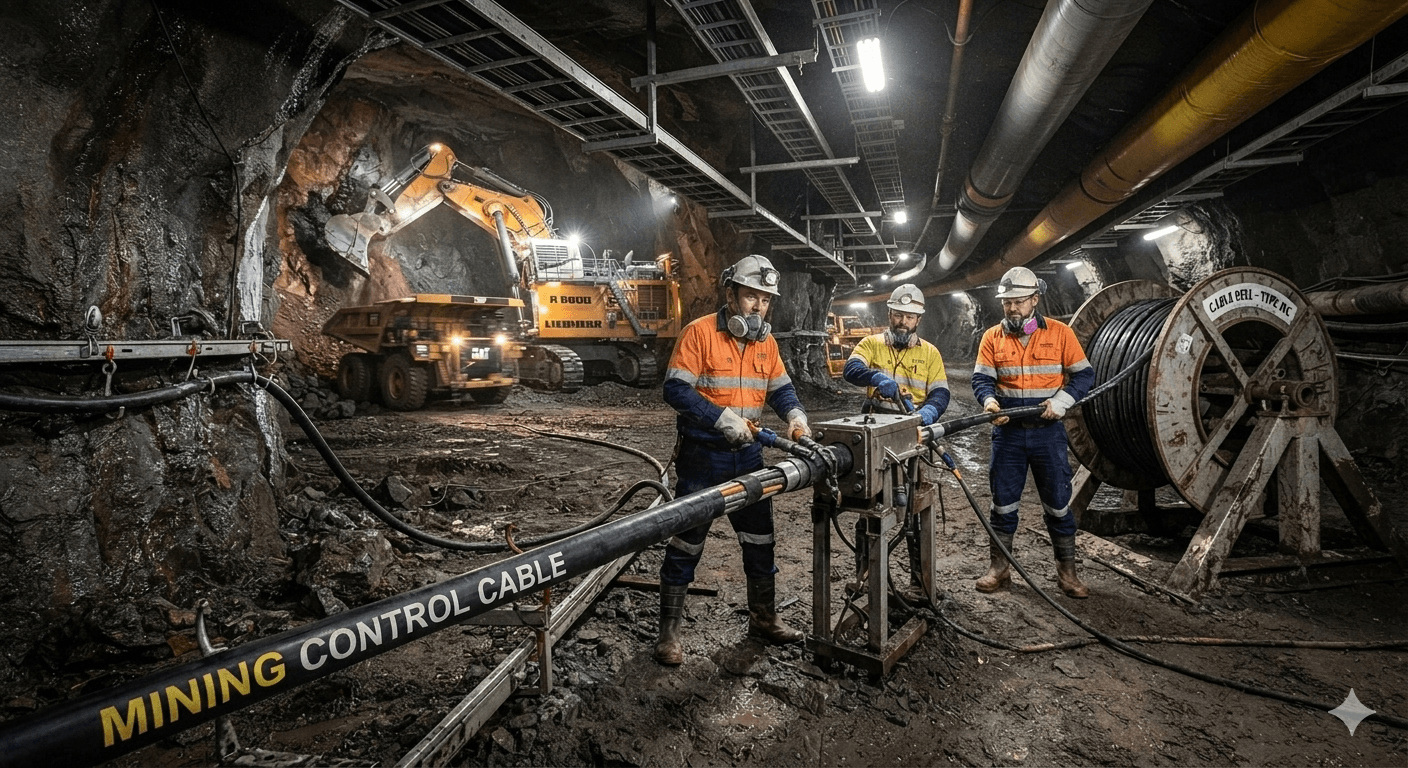
Mining Control Cables: These are suitable for mine automation control systems, with a multi - core structure (4-37 cores). They have flame-retardant properties (single-cable flame retardancy according to IEC 60332-1-2) and fire-resistance properties (Class A fire-resistance according to GB/T 19666-2019). They can withstand the humid underground environment (no breakdown at a relative humidity of 95%±3%).
2. Construction Engineering Cables
-
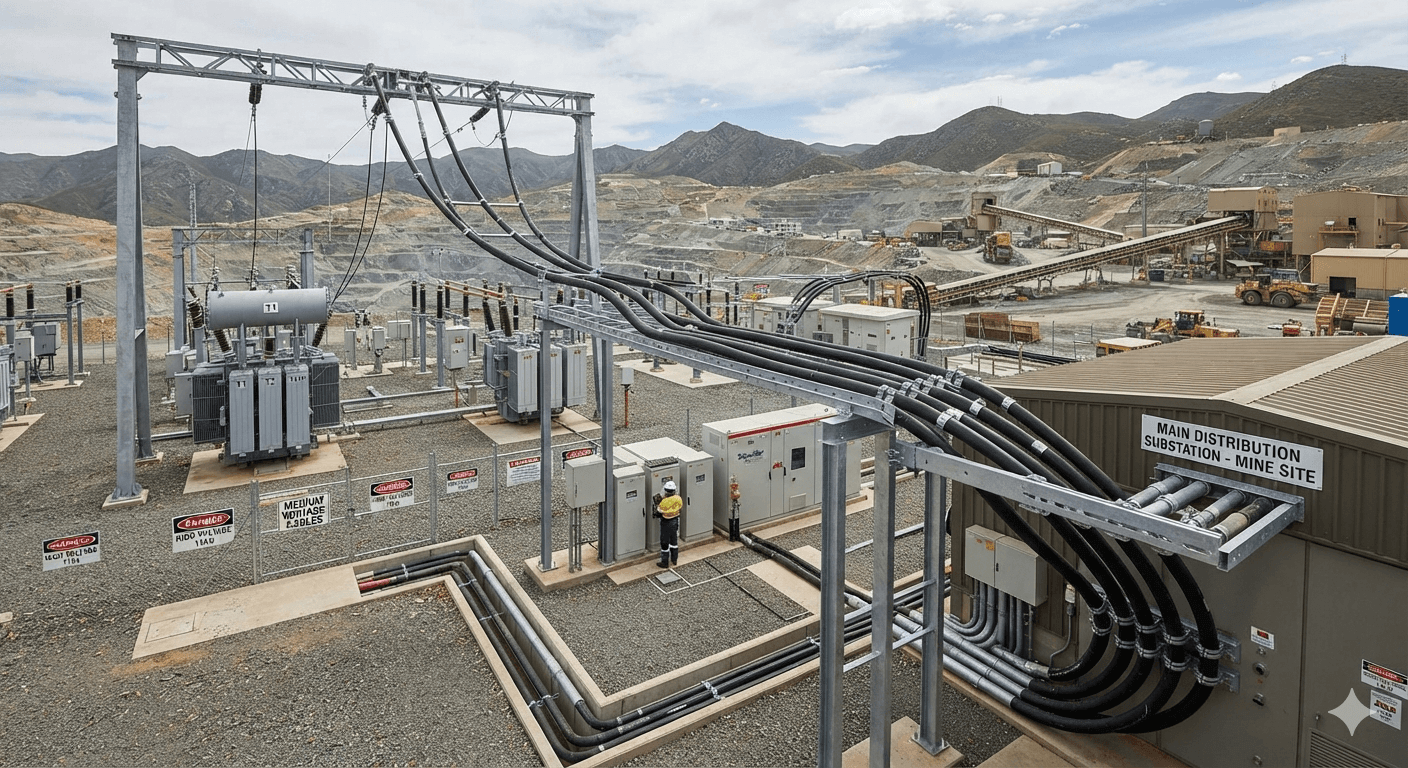
Medium-voltage Power Cables: These are used for the main distribution lines in buildings and surface substations in mines. They use cross-linked polyethylene insulation and steel-tape armoring, meeting the AS/NZS 3979 standard. The voltage drop is ≤2.5%, suitable for dense wiring in buildings and direct burial outdoors in mines.
- Low-voltage Power Cables: These are applied to building lighting, power systems, and mine auxiliary facilities, with a voltage rating of 0.6/1kV and wire diameter specifications ranging from 1.5mm² to 240mm². They have moisture - proof and anti - aging properties and comply with the Australian AS/NZS 3000 electrical installation code.
- General Wires: These are used for indoor wiring in buildings, with copper cores and polyvinyl chloride insulation. They have a flame-retardant rating of Class B, suitable for wiring requirements in different decoration scenarios.
3. Customized Adaptation Services
- For the high-temperature environment in the Australian deserts, anti-UV stabilizers are added to the cable outer sheaths, and they pass the 720-hour UV aging test without cracking.
- For the mines on the South American plateaus, low-temperature resistance modification is added to the cables (operating range from - 20°C to +60°C) to adapt to the large temperature difference between day and night.
- All
mining cables are equipped with tensile reinforcement cores to meet the mechanical requirements of dragging and moving mining equipment.
Ⅲ. Delivery and Inspection: Full - process Quality Control and Zero - defect Trans - continental Delivery
To ensure that the products meet the market access and usage requirements in Australia and South America, a "Four-dimensional Inspection & Cross-border Collaboration" guarantee system is established:
1. Full-item Factory Inspection: Tests are conducted on 32 indicators, including electrical performance (insulation resistance ≥100MΩ, no breakdown in the 3.5kV/5-minute voltage-withstand test), mechanical performance (bending radius ≤ 10 times the cable outer diameter), and environmental adaptability (high and low temperature cycling, oil and acid-alkali resistance). Mining cables also pass the special inspection for coal safety certification (MA).
2. Cross-border Delivery Assurance: By combining sea and land transportation modes, all orders are delivered within the 16-week delivery period required by the customer, avoiding the risk of cross-continental logistics delays.
Ⅳ. Customer Feedback: Stable Performance across Scenarios and High Industry Recognition
After 24 months of project operation, the core evaluations are as follows:
- Reliability far exceeds expectations: Mining cables operate without failures in humid and dusty underground mines and under frequent equipment dragging conditions.
Building cables do not show insulation aging after being tested by high temperatures in Australia and heavy rains in South America. The overall failure rate is reduced by 75% compared with previous suppliers.
- Compliance costs are significantly optimized: The complete certification and inspection documents for multiple countries help the customer successfully pass random inspections by local regulatory agencies in Australia and South America, avoiding project shutdowns due to compliance issues.
- Installation efficiency is improved: The cables have good flexibility and are easy to lay. The wiring efficiency in construction projects is increased by 40%, and the wiring time for mining equipment is shortened by 30%, reducing labor costs.
- The full-life-cycle value is prominent: The cables have excellent wear - resistance and anti-aging properties, significantly reducing the later replacement and maintenance costs.
Ⅴ. Industry Typicality and Universal Value of the Solution
The customer's needs and pain points are highly representative of the construction and mining industries in Australia and South America. The successful cooperation verifies the three core universal values of the solution:
1. Universal Multi-regional Compliance: It covers mainstream standard systems such as the Australian AS/NZS, and can be directly replicated and applied in more South American countries like Peru and Colombia, as well as across Australia and New Zealand, solving the core pain points of multinational enterprises, such as "difficulty in obtaining multiple national certifications and complex market access".
2. Universal Cross-scenario Environmental Adaptation: From underground mines, high-temperature deserts to plateaus with strong UV rays and construction sites, the full-range products have characteristics such as wear resistance, temperature resistance, corrosion resistance, and drag resistance, and are suitable for more than 90% of application scenarios in the construction and mining industries. They can meet different working conditions without additional customization.
3. Universal Full-range Supply and Service: It provides one-stop supply of medium and low-voltage power cables, mining cables, and wires, along with full-process services including "factory inspection & cross-border delivery and technical support", solving the pain points of the industry, such as "scattered procurement and slow after-sales response", and meeting the full-scale needs from small and medium-sized mines, residential buildings to large-scale infrastructure projects and super-large mines.